
01 · Joining
Metal-Ceramic Bonding
An elastic bond that stays intact across a 100-200% thermal-expansion mismatch, no cracking.

Aircraft, engines, and computers have each been reinvented many times since the Chicago Pile. Reactor materials, and the way we run them, largely have not. Active research programs change that, making the core lighter, tougher, and transport-ready, and unlocking capabilities conventional fission cannot reach.
Each is an active research program that turns a hard limit of conventional fission into a defensible advantage.
An elastic bond that stays intact across a 100-200% thermal-expansion mismatch, no cracking.

Shielding can outweigh the reactor 5-10×. We hold the dose while cutting hundreds of kilograms.
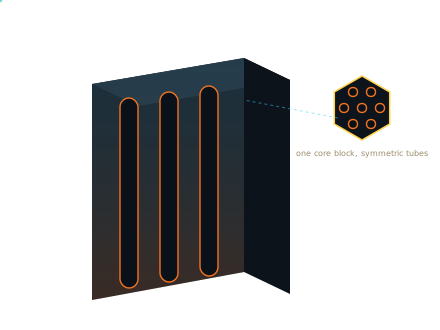
Core heat routed with far fewer parts and joints, and far less mass, than conventional designs.

Smart materials that route heat around the moderator to the coolant, by design.

One material that moderates, reflects, and bears load, three subsystems collapsed into one.

Reactivity set by an additively-manufactured smart topology, no drums, no actuators.
If your mission needs it lighter, tougher, or transport-ready, these are the problems we work.